
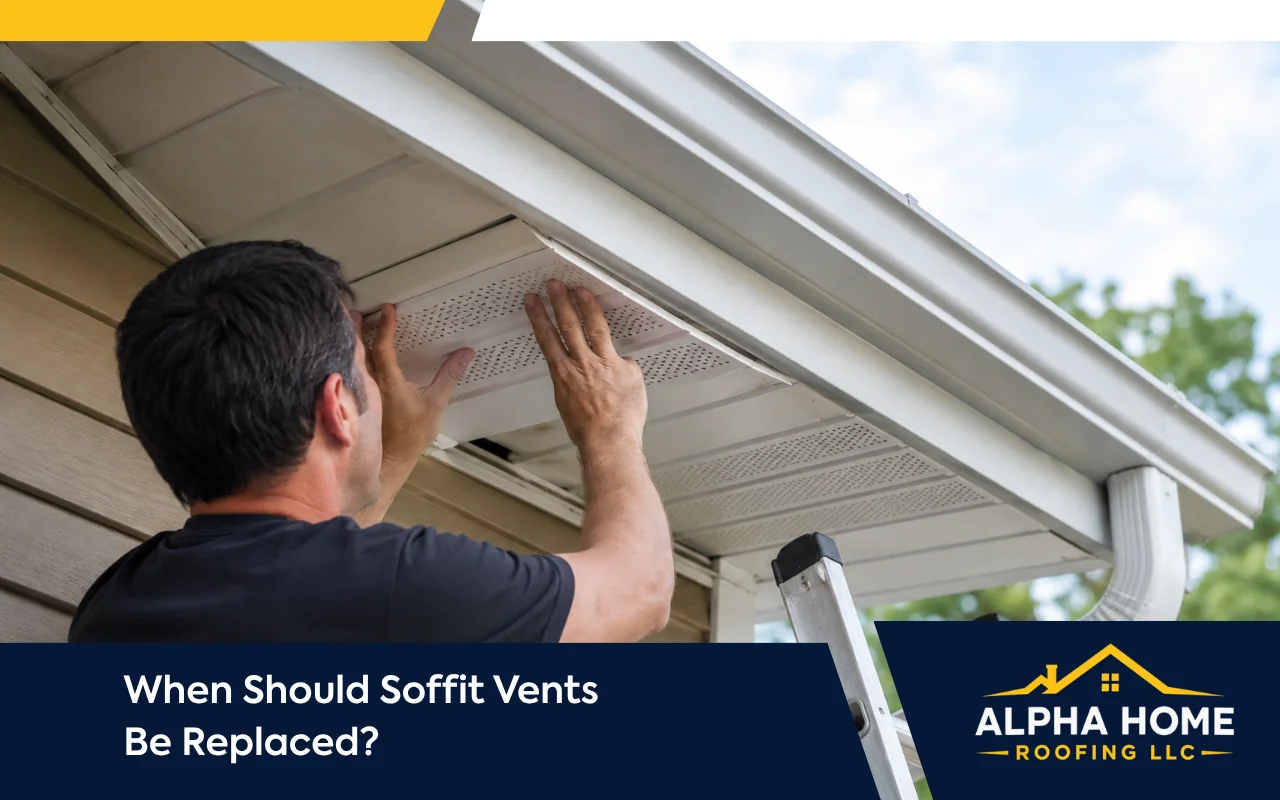
Proper soffit vent replacement can improve attic airflow and help limit moisture or heat buildup. When vents become blocked or damaged, fresh air may not reach the attic.
Homeowners can also explore durable fiber cement soffit options for exterior protection and ventilation support.
At Alpha Home Roofing LLC, we help homeowners understand how soffits, siding, and roof vents work together. This guide explains common warning signs, safe replacement steps, and practical ways to maintain balanced airflow around homes in Elizabeth, New Jersey.
Understand How Balanced Soffit Airflow Protects Your Home
Vented soffit panels allow outdoor air to enter the lower part of the attic. Warm and humid air can then leave through ridge vents or other roof openings.
This steady movement supports a balanced system and may reduce the risk of trapped moisture, overheated attic spaces, and damage to nearby wood.
Soffit vents cannot work well when upper roof vents are missing, blocked, or poorly placed. Reviewing your complete roof ventilation system in New Jersey can reveal whether intake and exhaust openings are working together correctly.
Spot Failing Soffit Vents Before Damage Spreads
Visible damage and indoor comfort changes can point to soffit airflow problems. A careful inspection from the ground and inside the attic can help you decide whether cleaning, minor repairs, or replacement may be needed.
Soffit Vent Warning Signs
- Cracked, loose, bent, or missing soffit panels
- Vent openings blocked by paint, insulation, nests, or debris
- Peeling finishes or dark stains near the roof edge
- High attic temperatures during warm weather
- Condensation, damp insulation, or musty attic odors
- Uneven temperatures in rooms below the attic
Key Takeaway
Soffit vents matter because they supply attic intake air. When vents are blocked, damaged, or painted over, the full ventilation system may stop working correctly.
Compare Soffit Vent Problems and Next Steps
Not every soffit issue requires full replacement. Some problems may need cleaning, while damaged panels, blocked intake paths, or hidden wood concerns may require a closer review.
Soffit Vent Replacement Guide
| Problem | Why It Matters | Helpful Next Step |
|---|---|---|
| Painted-over vent openings | Air cannot enter the attic properly. | Inspect the openings and restore intake airflow. |
| Cracked or missing panels | Open sections may expose the roof edge to pests or moisture. | Replace damaged panels with suitable vented soffit panels. |
| Insulation blocks the eaves | Fresh air cannot move from soffits into the attic. | Review baffles and insulation clearance. |
| Dark stains near soffits | Moisture or poor airflow may be affecting nearby materials. | Check the soffit, fascia, attic, and roof ventilation balance. |
| High attic temperatures | Intake or exhaust ventilation may be limited. | Review the full attic ventilation system. |
Plan a Safe Soffit Vent Replacement
Before starting, inspect the full soffit area and confirm that the supporting wood is dry and stable. Hidden rot, damaged trim, or difficult roof edges can make the project unsafe for a basic do-it-yourself repair.
Prepare materials that match the existing soffit system. Vented soffit panels should fit the opening, provide suitable intake space, and connect cleanly with the surrounding trim.
Follow the panel manufacturer’s instructions because fastening and spacing needs can vary by material.
Replacement Tools and Materials
- A stable ladder placed on firm ground
- Safety glasses and protective work gloves
- A tape measure, utility knife, and chalk line
- A drill with suitable screwdriver bits
- Exterior-rated fasteners and sealant
- Replacement panels that match the existing soffit
Key Takeaway
Replacement should begin with a full soffit and attic review. Damaged wood, blocked intake paths, or unsafe access can change the right repair plan.
Remove and Replace Damaged Soffit Panels Carefully
Begin by removing trim only where necessary. Cut through old sealant and release fasteners without pulling hard against nearby siding or fascia.
During soffit vent replacement, check the exposed cavity for insects, wet insulation, damaged wood, or material that may block the intake path.
Fit each new panel so it sits evenly with the surrounding soffit. Fasten it without squeezing or bending the vent openings.
Leave the designed air slots clear, seal exposed edges where required, and avoid filling ventilation gaps with caulk or paint.
Support Airflow With Baffles and Roof Vents
Insulation can shift toward the eaves and cover soffit openings. Baffles create a clear path between the vented soffit panels and the upper attic.
They should extend above the insulation so incoming air can move toward the roof exhaust vents without carrying loose material into the airflow channel.
Attic ventilation siding details should also be checked where exterior materials meet the roof edge. Our team can review these connections and identify whether damaged soffits, blocked intake openings, or limited exhaust ventilation may be affecting the system.
Key Takeaway
Soffit vents need clear roof vent channels above them. Baffles, insulation clearance, and exhaust vents help intake air move through the attic.
Prevent Future Soffit Airflow Problems
Regular exterior checks can prevent small blockages from becoming larger ventilation concerns. Homeowners should keep vent slots open and remove surface dirt without pushing debris deeper into the openings.
Professional soffit and fascia cleaning may help when stains or buildup are difficult to reach safely.
Soffit Maintenance Checklist
- Inspect soffit openings after storms or exterior repairs
- Keep insulation from covering attic intake areas
- Trim branches that drop leaves near the roof edge
- Check for insects, nests, and loose exterior materials
- Avoid painting over perforated ventilation openings
- Review attic moisture and temperature changes each season
Frequently Asked Questions
Can blocked soffit vents cause attic moisture?
Yes. Blocked vents can reduce incoming air and allow moisture to remain in the attic. Check for insulation, dirt, nests, or painted openings. A review of your balanced roof ventilation can also show whether exhaust vents are removing humid air.
Should every soffit panel include ventilation openings?
Not always. The correct layout depends on the attic design, roof vents, panel type, and required airflow. Some systems combine solid and vented panels. Suitable fiber cement soffit solutions can be planned around the home’s exterior and ventilation needs.
Can dirty vents be cleaned instead of replaced?
Cleaning may be enough when panels are stable and the openings are only blocked by surface debris. Cracked, warped, rusted, or missing sections usually need repair or replacement. Our soffit and fascia cleaning options explain how routine care supports clear openings.
Can I replace soffit vents without professional help?
A small, low section may be manageable for a homeowner with the right tools and safe ladder access. High rooflines, hidden wood damage, complex trim, or unclear ventilation needs should be reviewed by a siding contractor in Elizabeth, NJ.
How do I know whether attic airflow improved?
Look for fewer moisture signs, more stable attic temperatures, and clear airflow paths above the soffits. When you choose Alpha Home Roofing LLC, we can examine the intake and exhaust areas to identify remaining blockages or damaged exterior components.
Arrange Practical Soffit Support in Elizabeth
Damaged panels and blocked vents can affect more than the appearance of your roof edge. At Alpha Home Roofing LLC, we assess soffits, siding connections, and ventilation openings so homeowners can make informed repair decisions.
Use our contact page for soffit ventilation concerns to discuss the condition of your home.