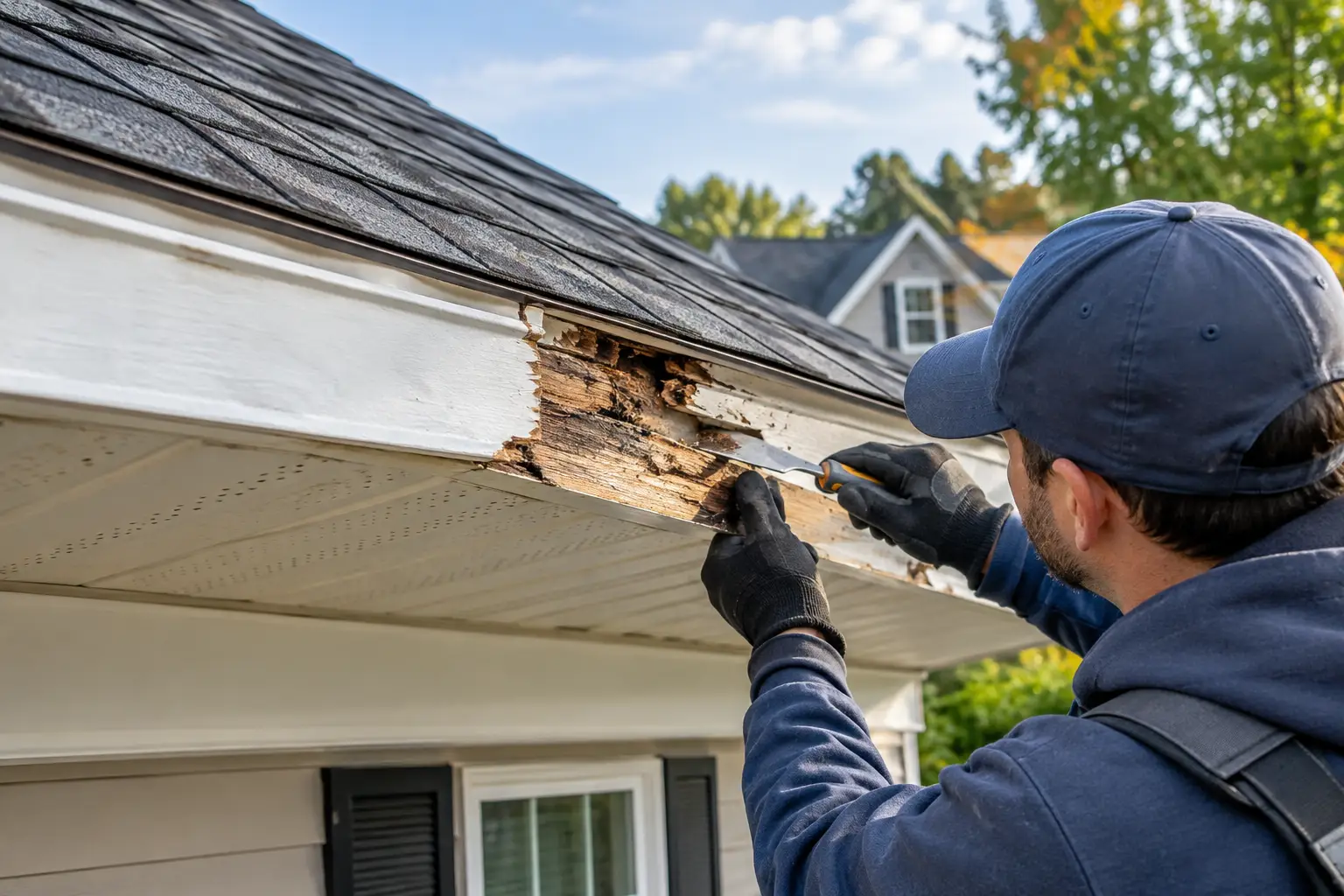
A stained, soft, or peeling board along your roof edge is not just a cosmetic problem. When you need to repair damaged roof fascia, you are often dealing with water that has already found its way past the gutter line. Left alone, that moisture can spread into the roof decking, soffit, attic edge, and siding – turning a manageable exterior repair into a bigger home protection problem.
For homeowners in Elizabeth, Linden, Union, and nearby North Jersey communities, fascia damage commonly shows up after heavy rain, clogged gutters, ice, or years of wear. The right repair depends on how far the damage has gone and why the board got wet in the first place. Replacing a bad board without fixing the water source only sets up the same failure again.
What Roof Fascia Does for Your Home
Fascia is the long horizontal board mounted at the lower edge of the roof, directly behind the gutters. It creates a clean finished roofline, supports the gutter system, and helps close off the gap between your roof and attic. On many homes, it also works with the soffit underneath to help keep out wind-driven rain, birds, squirrels, and insects.
Because fascia sits where the roof sheds water, it takes a beating. Gutters overflow onto it. Ice can pull on gutter fasteners. Wind can loosen metal wrapping. A small roof edge leak can soak it from above without being obvious from the ground.
That is why a damaged fascia board deserves quick attention. A few soft spots today can become loose gutters, rotted trim, and water-stained interior ceilings later.
Signs You Need to Repair Damaged Roof Fascia
Some fascia damage is easy to spot, while other problems hide behind gutters or aluminum trim. Walk around your home after a dry day and look up at the roof edge. You may need service if you see:
- Paint that is bubbling, cracking, peeling, or repeatedly failing in the same section
- Dark stains, swelling wood, soft areas, or visible rot along the roofline
- Gutters that sag, pull away from the house, or spill over during rain
- Open seams, loose fascia metal, animal activity, or water marks on the soffit below
Do not assume every discolored board needs full replacement. Sometimes the issue is limited to a small section of trim. But if a screwdriver can easily press into the wood, if gutters no longer hold securely, or if the rot extends behind the visible face, patching the surface is not enough.
Why Fascia Boards Rot in the First Place
The most common cause is gutter trouble. Gutters packed with leaves and debris hold water against the fascia. Downspouts that are clogged or disconnected can cause overflowing water to run back along the roof edge. Gutters installed with the wrong slope can do the same thing even when they look clean.
Roof leaks are another frequent cause. Missing shingles, damaged flashing, failed drip edge, or worn roof underlayment can allow water behind the fascia. In that case, replacing the board alone is a short-term cover-up. The roofing issue has to be repaired first so the new material stays dry.
Poorly installed gutter aprons and drip edges also create trouble. These metal pieces are designed to direct roof runoff into the gutter rather than behind it. When they are missing, bent, or improperly tucked under the shingles, rainwater can run directly onto the wood.
North Jersey weather adds another layer of stress. Freeze-thaw cycles, wind, snow, and summer storms can expose small gaps fast. Older homes with original wood fascia often need closer inspection because repeated moisture exposure eventually breaks down paint and protective coatings.
When a Small Repair Makes Sense
A limited fascia repair may be appropriate when the damage is isolated and the surrounding wood is solid. For example, a single short section might have rotted beneath an overflowing gutter corner while the rest of the roof edge remains dry and stable.
A proper small repair still involves more than covering the area with paint or caulk. The damaged section should be removed back to sound material, the framing behind it inspected, and the new board installed securely. The gutter must then be reattached correctly, with proper pitch and support.
Painting over a soft board may improve curb appeal for a few weeks, but it does not stop rot. Wood that is already deteriorated will continue to lose strength beneath the paint. This matters especially where the gutter brackets fasten into the fascia.
When Full Fascia Replacement Is the Better Call
Full or multi-section replacement is usually the smarter option when rot appears in several areas, the gutters are pulling away, or water has reached the soffit and roof decking. It may also make sense when the home has older fascia boards with widespread cracking and repeated paint failure.
Replacing more of the fascia costs more upfront than a small patch. However, it can prevent repeat labor, protect your gutter system, and give the roof edge a consistent finished look. The best option depends on the condition of the boards, the age of the roof, and whether there are related gutter or shingle issues.
If new roofing is planned soon, it is often practical to address damaged fascia at the same time. That gives the contractor access to the roof edge and makes it easier to install or correct drip edge details. Combining related exterior work can also avoid paying for separate setup and labor later.
What a Professional Fascia Repair Should Include
A reliable repair starts with finding the source of the moisture, not just measuring the visible damaged board. A contractor should inspect the roof edge, gutters, downspouts, soffits, shingle condition, and any signs of leaking around the eaves.
The damaged fascia is then removed carefully so hidden rot is not missed. If the framing behind the board is soft, that needs repair before new fascia goes up. Installing fresh wood over weakened material may make the area look better, but it will not provide a secure base for gutters.
Next comes protection against another water problem. Depending on the home, this may include gutter cleaning or replacement, correcting gutter slope, adding or repairing drip edge, resealing exposed areas, and replacing damaged soffit material. New fascia can be wood, composite, or another suitable material based on the existing exterior and budget. Aluminum wrapping can also help reduce future maintenance when installed correctly.
Finally, the gutters must be secured into solid backing and tested for drainage. Water should move toward the downspouts without standing in the gutter or spilling behind it. That final check is where a complete exterior repair separates itself from a quick cosmetic fix.
Can You Repair Fascia Yourself?
A homeowner can sometimes repaint sound fascia, clear a simple gutter clog, or replace a short piece of trim at ground-level areas. But roof-edge work carries real risks. You are working on a ladder, near gutters that may be unstable, and often close to a roof slope. Hidden rot can also make a board or gutter less secure than it appears.
DIY work becomes especially risky when the gutter needs to come down, damage extends under shingles, or there are signs of attic leaks. Incorrectly installed fascia, flashing, or gutter hangers can direct more water behind the new board and make the problem worse.
A professional inspection gives you a clear picture of whether the repair is small, whether roof decking is involved, and what needs to be fixed to stop the leak. Alpha Home Roofing LLC provides fast, practical exterior evaluations for homeowners who need to protect their roof edge before water damage spreads.
Do Not Wait for the Gutter to Fall
A sagging gutter is often the warning sign homeowners notice last. By then, the fascia behind it may already be too weak to hold fasteners. Acting when you first see peeling paint, stains, overflow, or loose trim can save you from a larger roof, gutter, and siding repair.
If your roof edge looks worn or your gutters are overflowing, get the area checked soon. A prompt repair can keep one damaged board from becoming a costly water problem inside the home.