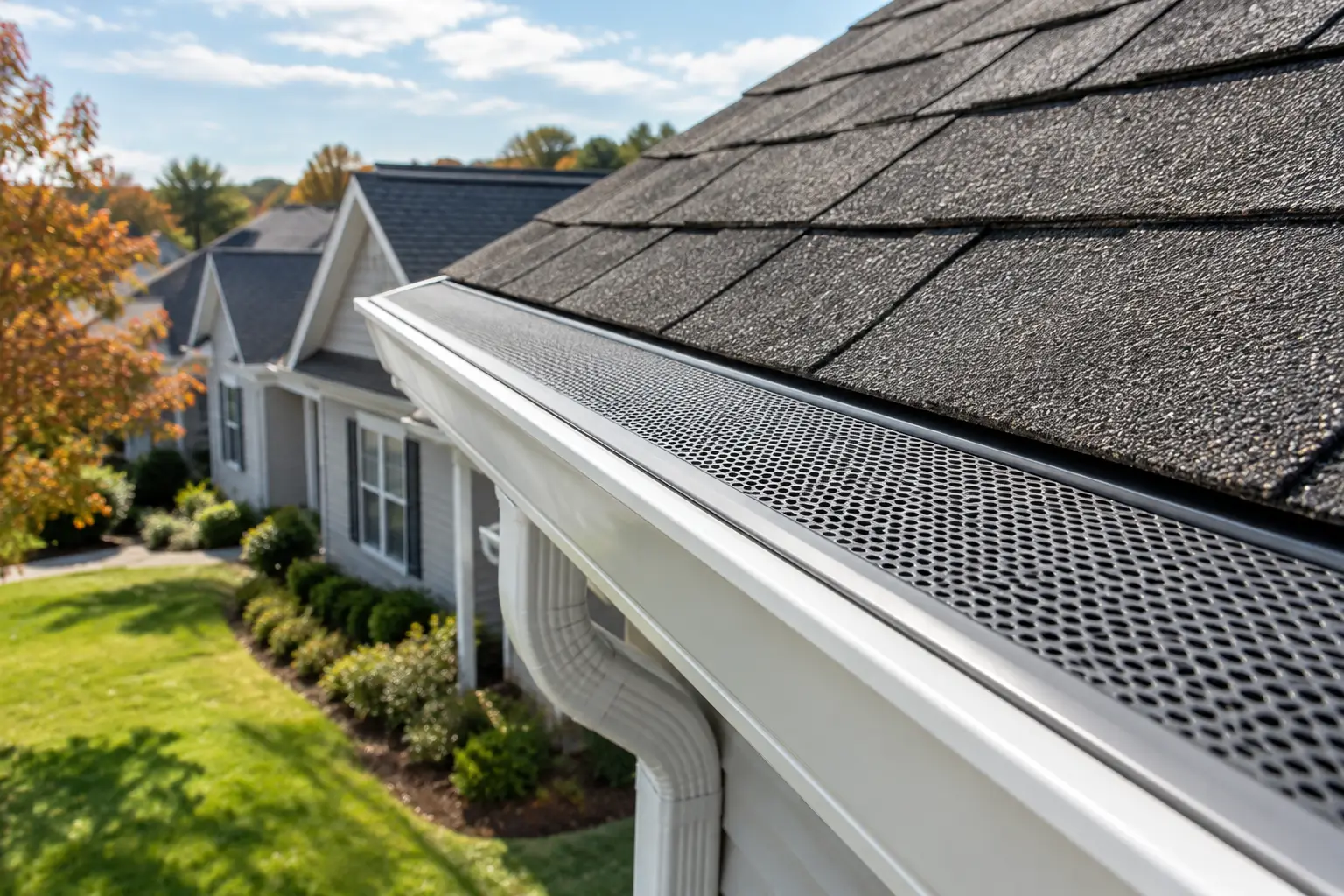
A gutter can look fine from the ground while holding enough wet leaves, shingle grit, and standing water to cause trouble at the roofline. Then comes a hard rain, and water spills over the edge, runs down siding, soaks the ground near the foundation, and can work its way where it does not belong. So, are gutter guards worthwhile? For many New Jersey homeowners, yes – but only when the guards fit the home, the gutters are in sound condition, and expectations are realistic.
Gutter guards are not a magic shield that makes a gutter system maintenance-free. They are a practical upgrade designed to reduce the amount of debris that enters the gutter and slow down the clogging cycle. Installed correctly, they can help protect the roof, siding, fascia, landscaping, and foundation from uncontrolled water.
Are Gutter Guards Worthwhile? It Depends on the Property
A home surrounded by mature trees usually gets the most value from gutter guards. Oak leaves, maple seeds, pine needles, twigs, and roof grit can fill open gutters quickly. If you are cleaning gutters several times a year or dealing with recurring overflow near the same roof valleys, guards may be a smart investment.
They can also make sense for homeowners who have steep rooflines, a second story, or difficult access around the house. Climbing a ladder to clean gutters is not a small chore. It brings real fall risk, especially when the ground is soft, wet, or uneven. Guards do not eliminate the need for inspection, but they can reduce how often a homeowner needs to get up there.
On the other hand, a house with few nearby trees and a well-pitched roof may not need an expensive gutter guard system. In that situation, regular cleaning may be the more cost-effective choice. The right answer comes down to debris, roof design, gutter condition, and how often water is already causing problems.
What Gutter Guards Actually Do
Gutter guards cover or filter the opening of the gutter while allowing rainwater to enter. Their job is to keep larger debris out before it can pack into a wet blockage. When water can move freely through the gutter and downspouts, it is directed away from the home instead of overflowing at the eaves.
That matters more than many homeowners realize. Overflowing gutters can saturate fascia boards, stain siding, wash out mulch, and create puddles near the foundation. During freezing weather, trapped water can contribute to ice buildup along the roof edge. No single exterior upgrade solves every water problem, but a properly working gutter system is one of the first lines of defense.
The best result comes when the whole system is addressed. Gutters need the right pitch, secure hangers, clear downspouts, and properly placed extensions. Putting guards over sagging or clogged gutters will not fix the underlying issue. It can hide it until the next heavy storm exposes the problem.
The Benefits Homeowners Usually Notice
The main benefit is fewer clogs. Instead of filling the gutter channel, most leaves and larger debris stay on top of the guard and dry out. Wind may carry some away, while the rest can be brushed off during a seasonal inspection.
Guards can also help reduce the wet, decaying material that attracts insects and encourages plant growth in open gutters. They limit the amount of debris that reaches downspouts, where a blockage can be harder to spot and harder to clear.
For homes in Elizabeth, Linden, Union, and nearby areas with heavy leaf drop, the biggest advantage is often peace of mind during storm season. Homeowners know that their gutters have a better chance of handling a sudden downpour without pouring water over the front entry, driveway, or flower beds.
There is another long-term benefit: less standing water near vulnerable exterior materials. Keeping water moving can help preserve fascia, soffits, siding, and the lower areas around the home. That does not replace roof maintenance or repair, but it supports the rest of the exterior protection system.
The Trade-Offs You Should Know Before Installing
Gutter guards still need maintenance. Fine debris, roof granules, pollen, and small seeds can collect on top of some guard styles. Pine needles can be especially challenging because they may settle into openings that handle larger leaves with no problem.
Water performance also depends on the guard design and installation quality. If a guard is installed at the wrong angle, set too high, or poorly secured, heavy rain can run past it instead of entering the gutter. This is why installation should not be treated as a simple add-on. The guard must work with the roof edge and the existing gutter system.
Some low-cost products can warp, clog easily, or become loose after seasonal weather changes. A guard that restricts water flow is worse than no guard at all. It is better to choose a durable option that fits the gutter size, roof pitch, and type of debris around your property than to buy based on price alone.
Homeowners should also be cautious about placing guards over damaged gutters. If gutters are pulling away from the fascia, leaking at seams, or holding water because of poor pitch, repair or replacement should come first. Otherwise, the guard installation can delay a needed fix.
Choosing the Right Type of Gutter Guard
There is no single best guard for every house. Screen-style guards are common and can block larger leaves, but smaller debris may still get through. Fine mesh guards catch more small debris, though they may need surface cleaning in areas with heavy pollen or pine needles.
Reverse-curve systems are designed to guide water into the gutter while shedding debris over the edge. They can perform well when sized and installed correctly, but they are not the right fit for every roofline. Brush and foam inserts are usually less expensive, yet they tend to collect debris within the gutter and often need more frequent replacement or cleaning.
A professional evaluation should look beyond the guard itself. The contractor should check whether the gutters are properly sized, whether the downspouts can handle the roof runoff, and whether the roof edge is directing water where it should go. A gutter system is only as reliable as its weakest part.
Signs Your Home May Benefit From Gutter Guards
You may be a good candidate if you regularly see leaves packed into gutters, water spilling over during rain, staining on siding below the roofline, or mulch and soil washing away near the house. Frequent downspout clogs are another clear warning sign.
Look up after a storm as well. If water is running behind the gutter, dripping from soffit areas, or spilling in sheets over the front edge, do not assume guards alone are the answer. Those symptoms can point to loose gutters, damaged fascia, roof drainage issues, or a blocked downspout. A proper inspection can identify what needs attention before water damage spreads.
Installation Matters More Than the Sales Pitch
The difference between a worthwhile gutter guard and a frustrating one often comes down to workmanship. Existing gutters should be cleaned, flushed, inspected, and secured before guards go on. Downspouts should be checked for flow, and leaking seams or loose hangers should be repaired.
At Alpha Home Roofing LLC, the focus is on the full exterior picture, not just covering a gutter. If your gutters are overflowing or showing signs of wear, a fast inspection can help determine whether cleaning, repair, replacement, or guards make the most sense for your home.
Do not wait for water to find its way behind siding or into the foundation area. If your gutters are already struggling, address the cause now and give your home a better chance of staying dry through the next hard rain.