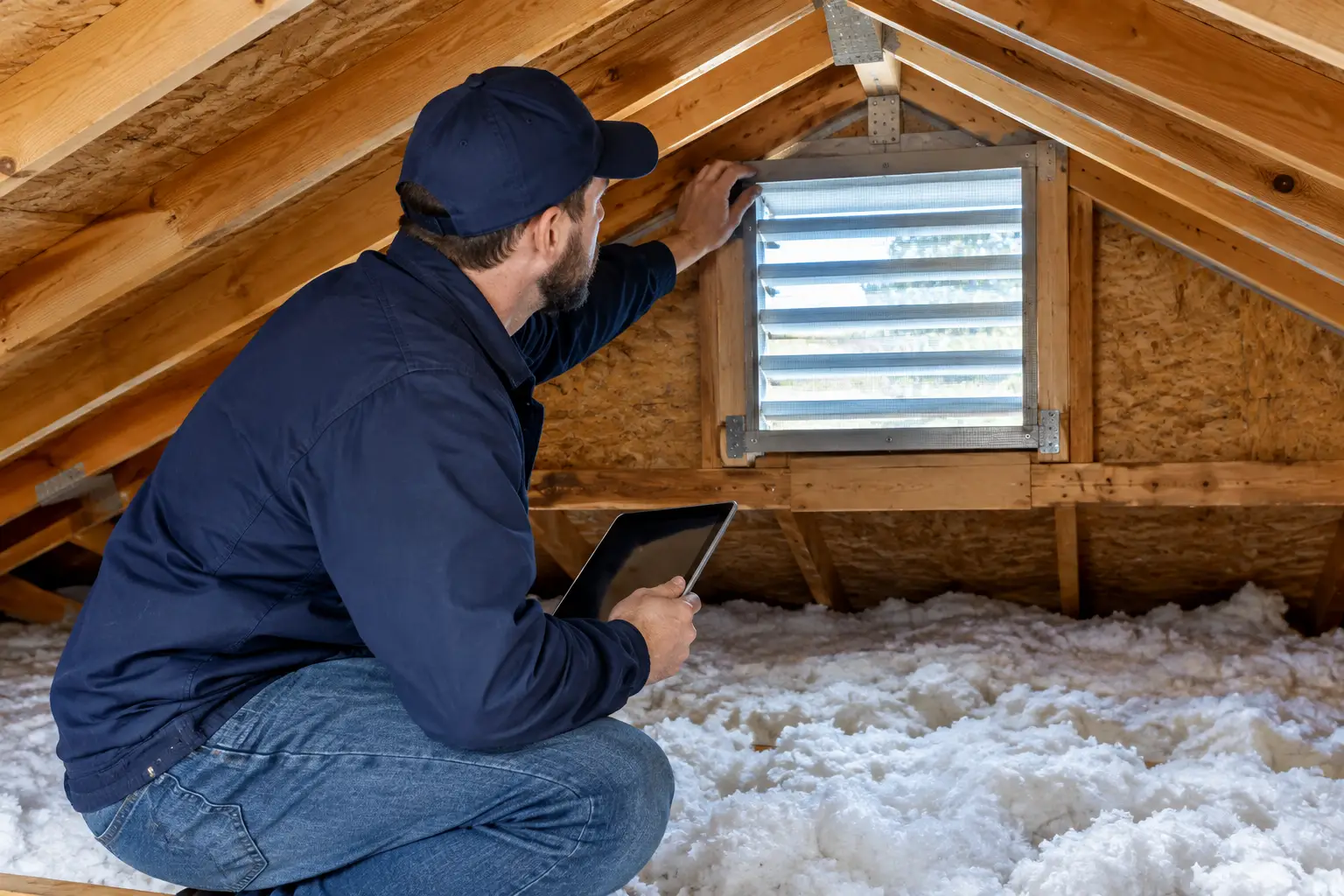
A wet attic is not a problem to watch for another season. If you see water droplets on roof nails, damp insulation, dark staining on the roof decking, or frost during a cold snap, you need an attic condensation solution before moisture turns into wood rot, mold growth, and roof damage.
For many New Jersey homeowners, attic condensation shows up in winter when warm indoor air rises into a cold attic. It can look like a roof leak, but the source is often inside the home. The fix depends on finding out exactly where the moisture is coming from, then correcting the airflow, insulation, ventilation, or roofing issue causing it.
What Causes Attic Condensation?
Your attic should stay dry. When warm, humid air from your living space reaches the cold underside of the roof, it cools quickly. That air releases moisture as condensation, much like a cold glass sweating on a humid day.
Small gaps can allow a surprising amount of warm air into the attic. Common trouble spots include attic hatches, recessed lights, plumbing openings, wiring holes, top plates inside walls, and gaps around chimneys. Bathroom fans and dryer vents that empty into the attic create an even bigger problem because they send moisture straight where it does not belong.
In Elizabeth, Linden, Union, and nearby North Jersey communities, cold winter temperatures can make the issue obvious. Frost may form on nails and roof sheathing overnight, then melt when temperatures rise. Homeowners may find water spots on ceilings or damp insulation and assume the roof is leaking. Sometimes it is. Other times, it is condensation dripping down from above.
That distinction matters. A roof repair will not solve indoor moisture pouring into the attic. On the other hand, adding vents will not repair missing shingles, failed flashing, or an aging roof that is letting rain in. A proper inspection looks at both possibilities.
Attic Condensation Solution: Start With the Moisture Source
The first step is stopping humid air before it reaches the attic. This is usually more effective than simply adding more roof vents.
Bathroom exhaust fans must vent outdoors through properly installed ductwork, not into the attic, soffit, or nearby roof overhang. The duct should be insulated and routed correctly so humid air does not condense inside the pipe and run back into the ceiling. Kitchen exhaust, where applicable, also needs a proper exterior outlet.
Next, the attic floor needs air sealing. This means closing gaps between the living area and the attic before adding or rearranging insulation. An unsealed attic hatch is a frequent weak point. So are gaps around pipes, electrical boxes, and framing penetrations. Insulation slows heat transfer, but it does not stop air movement by itself. Both jobs matter.
Indoor humidity may also need attention. Long showers without a running fan, unvented moisture sources, and poor bathroom ventilation can overload an attic during cold weather. A homeowner does not need bone-dry indoor air, but excessive humidity should be addressed before it finds its way into the roof system.
Check Insulation and Attic Ventilation Together
After air leaks are addressed, insulation and ventilation should be evaluated as one system. Insulation helps keep warm air in the living space. Ventilation helps remove heat and small amounts of moisture that still enter the attic. Neither one works as well when the other is ignored.
A balanced setup commonly uses intake ventilation at the soffits and exhaust ventilation near the roof ridge. Fresh air enters low, rises through the attic, and exits high. This movement helps keep roof decking drier and reduces excessive heat buildup in warmer months.
However, more ventilation is not always the answer. If soffit vents are covered by insulation, air cannot enter. If ridge vents are blocked, damaged, or installed incorrectly, air cannot leave. If powered attic fans are added without enough intake air, they can sometimes pull conditioned air from the home into the attic, making condensation worse.
The right attic ventilation plan depends on the roof design, existing vent locations, insulation depth, and condition of the roofing system. Homes with complicated rooflines, additions, dormers, or older ventilation layouts often need a closer look rather than a one-size-fits-all fix.
Rule Out a Roof Leak Before Damage Spreads
Condensation is common, but it should never be used as a guess that hides a roof problem. Rain leaks and condensation can leave similar marks, and both can damage wood framing and insulation over time.
A roof leak is more likely when moisture appears after rain, wind-driven storms, or snow melt. Look for damaged or missing shingles, loose flashing around chimneys and vents, cracked pipe boots, deteriorated valleys, or clogged gutters backing water toward the roof edge. Water stains concentrated in one area can also point to a leak instead of widespread attic humidity.
Condensation often appears more broadly across the attic. You may see moisture on many nail tips, widespread darkened sheathing, frost across the underside of the roof deck, or wet insulation in several locations. Still, the only responsible approach is an inspection that considers the entire exterior system.
Your roof, gutters, soffits, and ventilation work together. A damaged roof edge or blocked gutter can allow water where it should not be. Poorly maintained soffits can restrict intake ventilation. Addressing only one visible symptom can leave the main issue in place.
Do Not Ignore These Warning Signs
Call for a residential roof inspection if you notice any of the following:
- Water droplets or frost on attic nails, roof decking, or framing
- Damp, compressed, or stained attic insulation
- Musty odors, visible mold, or black spotting on wood surfaces
- Ceiling stains that grow after rain or after major temperature changes
- Peeling paint, bubbling drywall, or moisture around upper-floor ceilings
- Bathroom or dryer ducts ending inside the attic
These signs do not automatically mean you need a new roof. Many homes need targeted repairs, improved ventilation, air sealing, or insulation corrections. But waiting can turn a manageable repair into deck replacement, interior ceiling repair, or a larger roofing project.
What Homeowners Can Do Right Now
Start with the simple checks. Make sure bathroom fans are used during showers and left running long enough to clear humid air. Check that the attic hatch closes tightly. From the ground, look for obvious gutter overflow, damaged shingles, or loose roof components after a storm. Do not walk on roof surfaces or disturb wet insulation if you are not sure what you are dealing with.
Avoid quick fixes that only cover the symptom. Spraying mold cleaner on roof decking without controlling the moisture source does not solve the problem. Adding insulation over wet material can trap moisture. Opening random holes in the roof can create leaks and disrupt the intended ventilation path.
If you have active dripping, a ceiling bulge, visible mold, or signs of roof damage, act quickly. Water does not wait for a convenient time, and attic damage is easier to repair before it reaches finished living areas.
Get the Right Repair for Your Home
A dependable attic condensation solution begins with a clear diagnosis. The attic needs to be checked for moisture patterns, ventilation issues, air leaks, insulation problems, and roof defects. From there, the repair should match the cause – not just the most obvious stain.
Alpha Home Roofing LLC helps homeowners protect their roofs and exterior systems with practical inspections and straightforward recommendations. If your attic is damp, your ceiling is stained, or you are unsure whether you have condensation or a roof leak, get it checked before the next stretch of cold weather or heavy rain makes the damage worse.
A dry attic protects more than shingles. It protects the framing, insulation, ceilings, and comfort of the home your family depends on.