
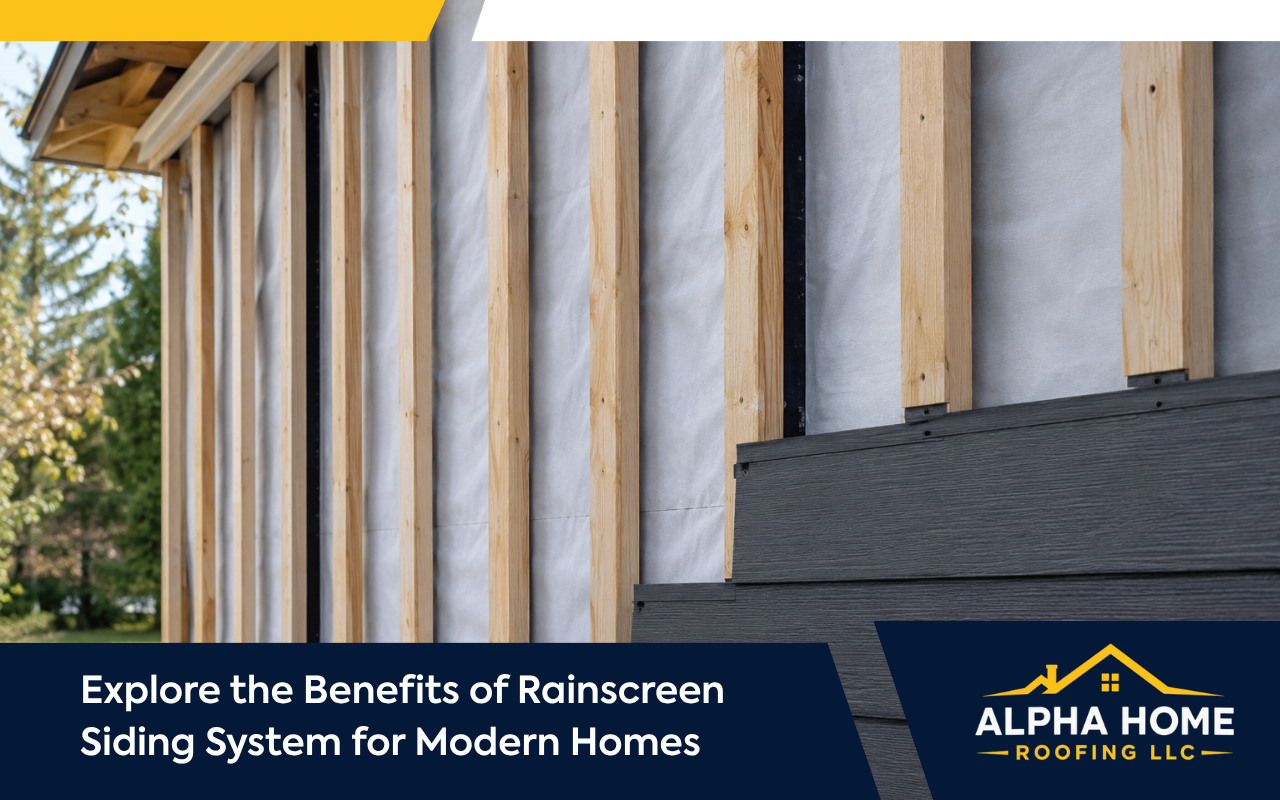
A rainscreen siding system helps protect exterior walls by creating space for water to drain and moisture to dry. This design supports the weather barrier instead of expecting siding alone to stop every drop of rain. A properly installed house wrap and siding barrier completes the protection.
At Alpha Home Roofing LLC, we focus on the details behind the visible siding. Drainage paths, airflow, flashing, and open exit points all affect wall performance. This guide explains how the system works and why careful installation matters for homes in Elizabeth, New Jersey. :contentReference[oaicite:0]{index=0}
How Rainscreen Walls Manage Hidden Moisture
Exterior siding blocks most rain, but small amounts of water can still move through joints, seams, and openings. Wind can also push moisture behind the cladding. A rainscreen wall assembly gives that water a controlled place to go before it reaches vulnerable wall materials.
The system creates a narrow cavity between the siding and the weather-resistant barrier. Water entering this space moves downward through gravity. Openings near the bottom allow it to leave the wall. Air moving through the cavity also helps damp surfaces dry after storms or humid conditions.
This approach supports moisture control walls by separating the outer cladding from the protected structure. The rainscreen siding system does not depend on one sealed surface. Instead, several layers work together to reduce trapped moisture and protect sheathing, framing, and insulation.
The Layers Behind Reliable Wall Protection
A complete rainscreen design uses connected layers rather than one siding product. Each part has a specific role in controlling rain, airflow, and drying. With Alpha Home Roofing LLC, you receive an installation approach that considers how these layers interact around the entire exterior.
- Exterior cladding: The visible siding sheds most rain and protects the wall from direct weather exposure.
- Ventilated cavity: Furring strips, clips, or another approved system create space behind the siding.
- Siding drainage plane: The open path allows water to move toward safe exit points.
- Weather-resistant barrier: This layer protects the sheathing from moisture that passes through the cladding.
- Flashing components: Proper flashing directs water away from windows, doors, corners, and wall transitions.
These layers must remain continuous. A blocked cavity or poorly connected flashing detail can interrupt drainage. The design should guide water downward and outward without allowing it to collect behind the siding.
Where Does Water Go Behind Siding?
Water that reaches the cavity should enter a clear vertical drainage path. Gravity carries it toward openings at the base of the wall. These exits must remain open so water can leave instead of pooling near the sheathing or lower framing.
The same cavity supports airflow. Air can enter near the bottom and move upward behind the panels when the assembly is designed for ventilation. This movement encourages drying and reduces the time damp materials remain exposed to moisture.
A rainscreen siding system also limits direct contact between wet cladding and the protected wall. This separation is important during repeated rain, snow, and changing temperatures. It gives moisture a way to escape even when the outer siding takes time to dry.
Installation Details That Keep Walls Dry
Small installation choices can determine whether a rainscreen performs as intended. Our team at Alpha Home Roofing LLC considers drainage continuity before fastening the first siding panel. The wall must manage water around every opening, edge, and material change.
- Prepare the wall surface: Damaged sheathing or loose materials should be addressed before new layers are installed.
- Apply the weather barrier: Seams and transitions must direct water toward the exterior.
- Flash wall openings: Windows, doors, vents, and utility penetrations need connected flashing details.
- Create the drainage space: Furring or approved spacers should provide a consistent path behind the cladding.
- Protect ventilation openings: Screens or compatible accessories can help keep debris and pests from blocking airflow.
- Allow material movement: Correct siding expansion gaps reduce pressure when panels expand or contract.
Fasteners must also match the siding and wall system. Incorrect placement can damage panels, compress the drainage space, or create unwanted water paths. Manufacturer instructions and applicable building requirements should guide the installation.
Choosing Materials for Elizabeth Weather
Homes in Elizabeth experience rain, humidity, winter conditions, and seasonal temperature changes. A siding drainage plane can support different cladding materials, but the complete assembly must suit the selected product and the existing wall.
Fiber cement, engineered panels, wood siding, metal, and other materials may be compatible with rainscreen construction. However, each option has different fastening, spacing, edge, and ventilation requirements. Homeowners should review suitable weatherproof siding options before choosing a final wall design.
A siding company in Elizabeth, NJ should also evaluate roof-to-wall areas, decks, trim, windows, and lower wall sections. These locations often need careful water management. The best material cannot correct a drainage path that ends in the wrong place.
The rainscreen siding system should be planned as part of the whole exterior. Siding type matters, but wall preparation and connection details often have a greater effect on moisture protection.
Maintenance Signs Homeowners Should Watch
Rainscreen walls are designed to drain and dry, but homeowners should still observe the exterior. Early attention can prevent a small opening or blocked drainage point from becoming a larger wall concern.
- Look for loose, cracked, warped, or shifted siding panels.
- Check sealant near windows, doors, vents, and utility openings.
- Keep lower drainage openings free from leaves, soil, mulch, and debris.
- Watch for stains that may show repeated water movement.
- Notice peeling paint, soft trim, or musty smells near exterior walls.
- Arrange an inspection after exterior changes that affect siding or flashing.
Avoid sealing intended drainage or ventilation openings during maintenance. These gaps may look unfinished, but they can be necessary for the wall to release water and moisture. Repairs should preserve the original drainage design.
Frequently Asked Questions
Does a rainscreen replace house wrap?
No. The drainage cavity and weather-resistant barrier perform different jobs. The cavity drains and dries moisture, while the barrier protects the sheathing. Our guide to house wrap behind siding explains how these layers work together.
How large is the space behind siding?
The required space depends on the cladding, wall design, manufacturer instructions, and local requirements. It must be wide enough to maintain drainage without weakening siding support. An installer should select compatible furring, clips, fasteners, and accessories.
Why are expansion gaps important?
Siding materials can move as temperature and moisture conditions change. Correct spacing helps prevent buckling, cracked edges, and pressure between panels. Review our information about expansion gaps for siding to understand this detail.
Can rainscreen construction help older homes?
It may be suitable when existing siding is replaced, but the wall must first be evaluated. Sheathing condition, window details, trim depth, and flashing connections can affect the design. When you choose Alpha Home Roofing LLC, we assess these areas before recommending an installation plan.
How can I discuss a rainscreen project?
Share information about your current siding, visible moisture concerns, planned materials, and exterior openings. You can contact our siding team to discuss the wall and arrange the next appropriate step.
Plan a Moisture-Smart Siding Upgrade
A well-planned wall does more than cover the exterior. It controls water after rain reaches the siding, supports drying, and protects important materials beneath the surface. The rainscreen wall assembly must include continuous drainage, compatible flashing, open exit points, and correct panel spacing.
At Alpha Home Roofing LLC, we approach siding as a complete protective system. Homeowners considering new cladding can plan a moisture-control siding consultation for their Elizabeth property. A careful evaluation can identify the wall details needed for reliable drainage and long-term protection.