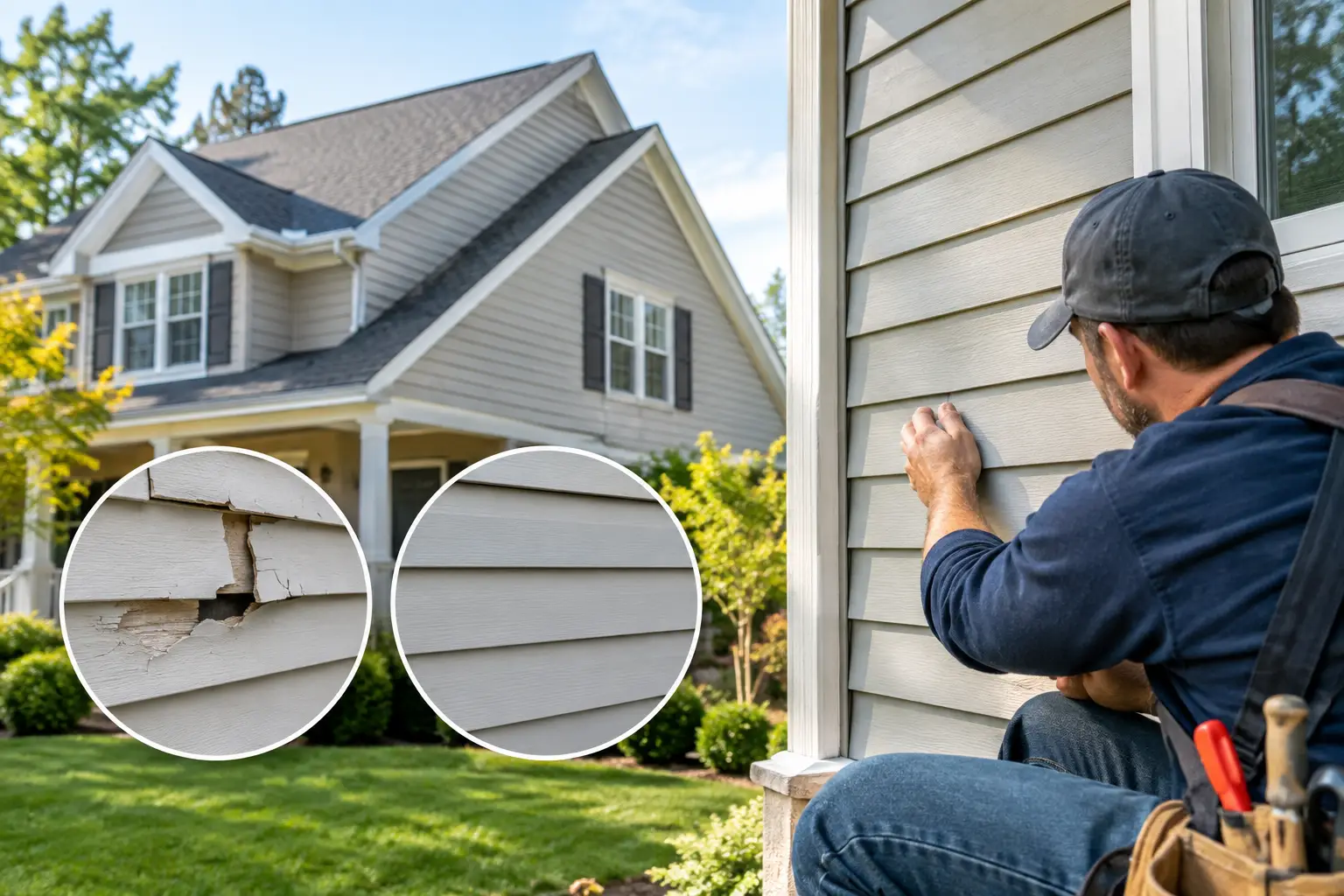
A few loose panels after a storm may look like a simple fix. But when water gets behind damaged siding, the problem can move quickly from the outside wall to the sheathing, insulation, and framing underneath. Deciding on siding repair versus replacement is not just about appearance. It is about stopping moisture damage before a smaller exterior issue turns into a major home repair.
For homeowners in Elizabeth, Linden, Union, and nearby North Jersey communities, weather takes a real toll. Wind-driven rain, summer heat, winter freeze-thaw cycles, and age can all wear down siding. The right choice depends on how widespread the damage is, what caused it, and whether the siding is still doing its main job: protecting your home.
When Siding Repair Is the Right Move
Siding repair makes sense when the damage is limited and the rest of the exterior is in solid condition. A cracked vinyl panel, a few warped boards, or a section damaged by a fallen branch can often be repaired without replacing every wall of the home.
The best repair candidates usually have a clear, isolated cause. For example, a baseball may crack one panel, strong wind may pull loose a small section, or a gutter overflow may stain and damage siding in one area. If the moisture source is corrected and there is no rot behind the material, a targeted repair can restore protection at a lower upfront cost.
Repair is also practical when your siding is relatively new and matching materials are still available. Vinyl, fiber cement, and some engineered wood products can often be matched closely enough that the repaired area does not stand out. With older siding, color fade can make an exact match harder. A new panel may be the same original color but still look brighter than the surrounding wall.
A professional inspection matters here. What looks like one damaged panel may be a sign that water has entered behind several rows of siding. Pulling back the affected section allows the contractor to check the wall sheathing, house wrap, flashing, and trim before closing everything back up.
Signs a Repair May Not Be Enough
There is a point where repeated patches stop being a good investment. If multiple sides of the house show damage, replacing isolated sections can leave you paying for the same problem again and again.
Look for widespread cracking, buckling, fading, loose panels, soft spots, or gaps around windows and doors. These signs can mean the siding has reached the end of its useful life. Peeling paint, swollen wood trim, or visible rot are more urgent concerns because they often point to trapped moisture.
Inside the home, watch for stains on exterior walls, musty odors, cold drafts, or higher heating and cooling bills. Siding is only one layer of your exterior wall system, but failed siding can allow water and air to get where they do not belong. If an inspection finds damaged sheathing or insulation behind several areas, replacement is often the more responsible option.
Termite or carpenter ant damage can also change the decision. Replacing a few boards without addressing hidden deterioration does not protect the home. The affected materials need to be opened up, the extent of damage confirmed, and the wall rebuilt properly before new siding goes on.
Siding Repair Versus Replacement: Compare the Real Costs
The cheapest option today is not always the least expensive option over the next few years. A small repair is usually more affordable when it stops a one-time issue. It becomes costly when it only covers up an aging system that continues to fail.
Replacement requires a bigger initial investment because it involves removing old siding, inspecting the wall surface, replacing damaged materials if needed, installing weather protection, and finishing the home with new siding and trim. In return, homeowners get consistent coverage, a uniform appearance, and a fresh warranty on the new materials and installation.
Think about the age of the siding. If it is near the end of its expected service life and has already needed several repairs, replacement can make better financial sense. If the siding is newer, the damage is limited, and the wall behind it is dry and sound, repair may protect your budget without cutting corners.
Curb appeal matters too, especially if you plan to sell in the next few years. Patchwork repairs, mismatched colors, and worn trim can make an otherwise well-kept home look neglected. Full replacement gives the exterior a clean, consistent finish and may help the home make a better first impression.
What a Proper Siding Inspection Should Check
Do not make this decision based only on what you can see from the driveway. A dependable siding contractor should inspect the damaged areas up close and look for the conditions that caused the problem.
That means checking panels or boards for cracks and movement, examining trim around windows and doors, looking for failed caulk, and checking whether gutters are sending water onto the siding. The inspection should also include roof edges, flashing, soffits, and fascia. A roof or gutter issue can create siding damage, and replacing siding without fixing the source can lead to the same problem all over again.
When sections are removed, the contractor should check for soft or rotted sheathing, mold-like staining from moisture, damaged insulation, and missing weather barrier. This step is especially important after storm damage or long-term gutter overflow. The siding itself may be the visible problem, but the wall behind it determines how extensive the repair needs to be.
Choosing Materials If Replacement Is Needed
If replacement is the right call, choose a siding material based on your home, maintenance expectations, and budget. Vinyl siding is a common choice because it is durable, low maintenance, and available in many colors and profiles. Fiber cement offers a more substantial look and strong durability, but it typically costs more and requires careful installation. Engineered wood can provide a traditional appearance with modern protection when installed and maintained correctly.
Good installation is just as important as the material. Siding needs room to expand and contract, proper flashing around openings, reliable moisture protection behind the panels, and clean integration with the roofline, gutters, trim, and windows. Cutting corners on these details can lead to leaks, warping, and premature failure.
For homeowners who need exterior work beyond siding, coordinating related repairs at the same time can prevent duplicate labor and avoid opening finished areas later. If gutters are overflowing, fascia is rotted, or roof flashing is failing near the damaged wall, handling those issues together protects the home more completely.
Do Not Wait on Active Water Damage
If siding is loose after a storm, water is coming into the home, or you see soft wood around an exterior wall, act quickly. Covering damage with caulk or pushing a loose panel back into place may buy a little time, but it does not confirm that the wall is dry or protected.
A fast, honest inspection gives you a clear answer: repair the damaged section, replace the failing areas, or plan for a full siding replacement before hidden damage spreads. Alpha Home Roofing LLC helps homeowners make that call with practical exterior inspections and straightforward recommendations.
Your siding should not be something you worry about every time rain starts. Address the damage while it is still manageable, and give your home the protection it needs for the next storm.