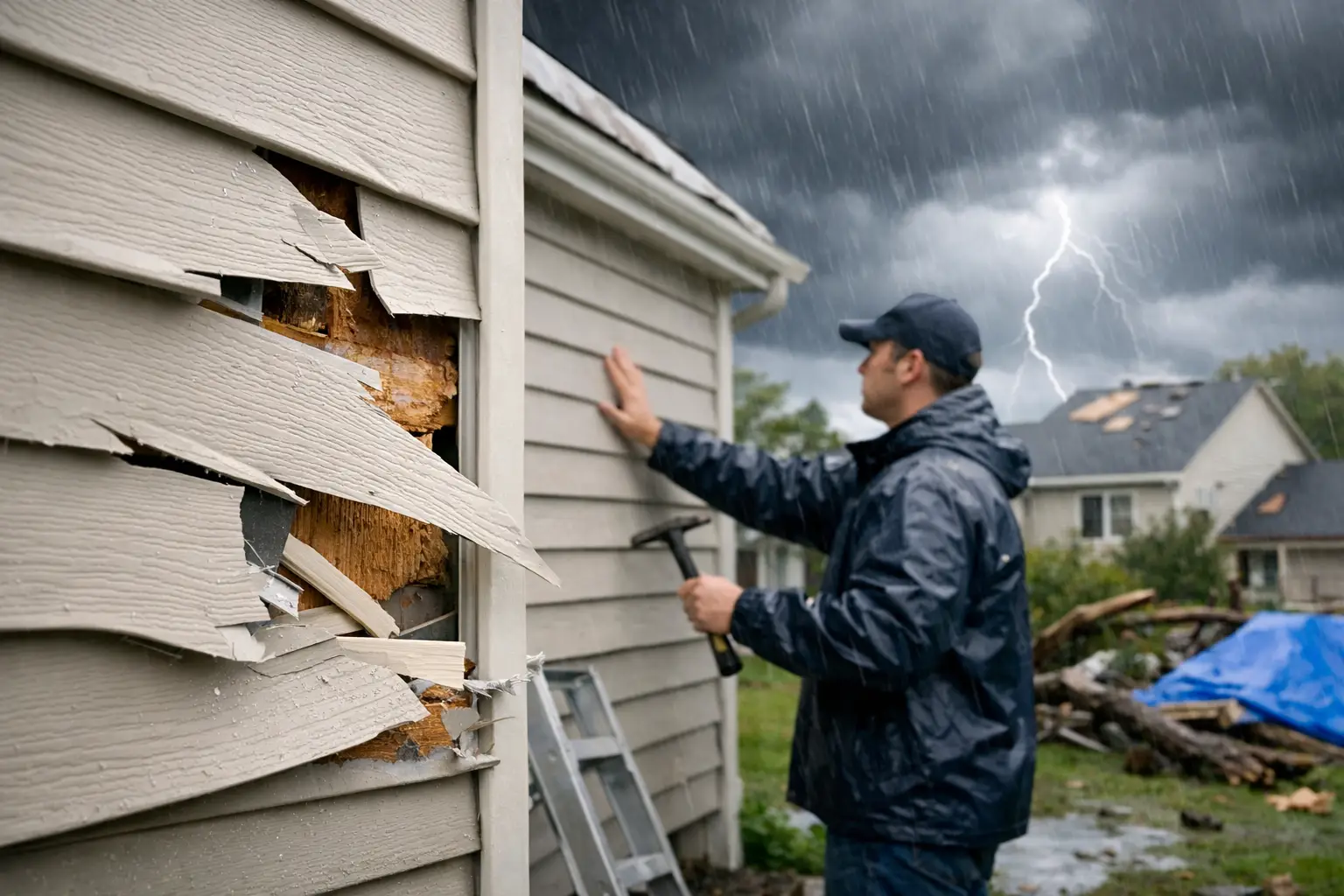
A hard storm can leave siding damage that looks minor from the driveway but lets water into the wall behind it. One loose vinyl panel, a cracked corner, or a gap around a window can become a mold, rot, or insulation problem if it is left open. This storm damaged siding guide explains what to check, what to do immediately, and when it is time to bring in a licensed exterior contractor.
Start With Safety and a Quick Visual Check
Do not rush outside while winds are still high, power lines are down, or branches are unstable. Wait until the property is safe, then walk around the home from ground level. You do not need a ladder to identify most urgent siding issues.
Look for missing panels, pieces hanging loose, cracked or punctured sections, bent aluminum, and siding that has pulled away from the trim. Check the lower portions of walls too. Wind-driven debris often strikes near corners, doors, patios, and areas protected from view by shrubs or fencing.
Pay attention to anything that changed after the storm. A panel that was slightly faded before the weather but is now bowed, rattling, or separated needs attention. If siding is loose around windows, rooflines, or utility penetrations, rain can travel behind the exterior surface and reach the sheathing.
Stay off the roof and avoid touching damaged electrical components. If a tree limb is resting on the house, do not try to remove it yourself. The priority is preventing further damage without creating a safety problem.
Signs of Storm-Damaged Siding That Homeowners Miss
Not all storm damage leaves a dramatic hole. Hail can create small cracks, dents, chips, and impact marks that weaken siding over time. Vinyl may split along an edge. Fiber cement can chip or crack. Aluminum can dent or crease. Wood siding may show fresh splits, peeled paint, or raised grain after repeated soaking.
Wind damage can be even harder to spot. Strong gusts can pull siding loose at the nailing hem, allowing panels to flap and shift without falling off right away. You may hear clicking or rattling in the wind, notice panels that no longer sit flat, or see gaps where rows should lock together.
Water clues matter as much as visible exterior damage. Look inside for new wall stains, damp drywall, bubbling paint, musty odors, or a sudden cold draft near an exterior wall. These signs do not always mean the siding is the only issue. Damaged roof flashing, gutters, windows, or trim can also send water into the same area. A full exterior inspection helps identify the actual entry point instead of repairing the symptom alone.
What to Do in the First 24 Hours
Take clear photos before moving, cleaning, or covering anything. Photograph every damaged elevation of the house, close-ups of cracks and missing pieces, and wider shots that show where the damage is located. If hail fell, document any dents in gutters, downspouts, window screens, or metal trim as well.
Next, protect exposed areas from rain. A contractor can secure loose siding, install temporary covering where needed, and check surrounding trim and flashing. Avoid driving nails through finished siding as a quick fix. That can create new holes and may make a proper repair more difficult. Duct tape is also unreliable outdoors, especially on wet or dirty surfaces.
If water has entered the home, remove wet belongings from the area and use fans or dehumidifiers if it is safe to do so. Do not cover up wet drywall or insulation before the area has been inspected and dried. Moisture trapped inside a wall can cause a much more expensive repair later.
For homeowners in Elizabeth, Linden, Rahway, and nearby North Jersey communities, fast action matters after heavy rain and wind. Storms often expose weak spots in multiple exterior systems at once, including roof edges, gutters, fascia, and siding.
Document Damage Before Filing a Claim
Your insurance company may require photos, dates, and a description of what happened. Keep a simple record of the storm date, visible damage, emergency protection work, and any interior water issues. Save receipts for reasonable temporary measures taken to prevent additional damage.
Do not assume every mark is covered or that every repair requires an insurance claim. Coverage depends on your policy, deductible, the cause of loss, and the age and condition of the materials. Normal fading, neglected maintenance, and long-term wear are often treated differently than sudden wind or hail damage.
An exterior contractor can provide an assessment and repair estimate, but the insurance company makes the final coverage decision. Be cautious with anyone who promises a claim outcome before inspecting the property and reviewing the damage. A dependable contractor should explain what they see clearly, document the work needed, and give you room to make an informed decision.
Repair or Replace? It Depends on the Damage
A focused repair may be the right answer when damage is limited to a few panels and matching material is available. Refastening loose siding, replacing cracked pieces, repairing trim, and resealing vulnerable openings can restore protection quickly without replacing an entire wall.
Replacement becomes more practical when damage is widespread, panels are brittle from age, water has reached the wall system, or matching the existing siding is not realistic. Older vinyl colors can fade enough that new panels stand out. In that situation, replacing one side of the home may provide a cleaner result than scattering visibly mismatched repairs across the wall.
Material also affects the decision. Vinyl siding is generally affordable and fast to repair, but severe impact can crack it. Fiber cement is durable but requires correct cutting, fastening, and paint matching. Wood can be repaired in sections, though rot behind the boards must be addressed before new material goes on. The best option is not always the least expensive repair today. It is the option that stops water, protects the structure, and does not force you to repeat the work next season.
Check the Whole Exterior, Not Just the Siding
Siding works with the rest of your home’s exterior system. When a storm damages one component, nearby materials may have taken the same hit. A proper inspection should include roof edges, shingles, gutters, downspouts, fascia, soffit, window trim, door trim, and flashing around penetrations.
For example, a clogged or detached gutter can overflow behind siding and create staining that looks like a siding failure. Missing roof shingles can let water travel down inside a wall. Loose soffit panels can allow wind-driven rain and pests into the eaves. Handling these issues together is often faster and more cost-effective than hiring separate crews for each visible problem.
Alpha Home Roofing LLC provides exterior inspections and practical repair recommendations for homeowners who need siding, roofing, gutter, or trim damage addressed without delay. Licensed and insured work, clear estimates, and prompt scheduling give property owners a straightforward path from storm damage to protection.
Choosing a Contractor After a Storm
Storms bring out good local contractors and high-pressure operators. Do not hire someone simply because they knocked on the door first or offered to start without a written scope of work. Ask whether the contractor is licensed and insured, how they will protect landscaping and property during the work, and whether they can explain the difference between emergency protection and permanent repair.
A solid estimate should identify the damaged areas, materials, labor, and any related work needed to make the repair complete. It should also address whether hidden damage could change the scope once siding is removed. That is not necessarily a red flag. Hidden rot or wet sheathing cannot always be seen until the exterior comes off. What matters is that the contractor communicates the possibility upfront and documents any necessary change.
Prevent the Next Small Problem From Growing
After repairs are complete, keep trees trimmed back from the home, clean gutters so water moves away from the siding, and inspect caulked joints around windows and doors each year. Watch for loose panels after major wind events, especially on the sides of the house that take the strongest weather.
A small siding issue is rarely just cosmetic once rain finds its way behind the wall. Take photos, protect exposed areas, and get a qualified inspection before the next storm turns a manageable repair into interior damage.