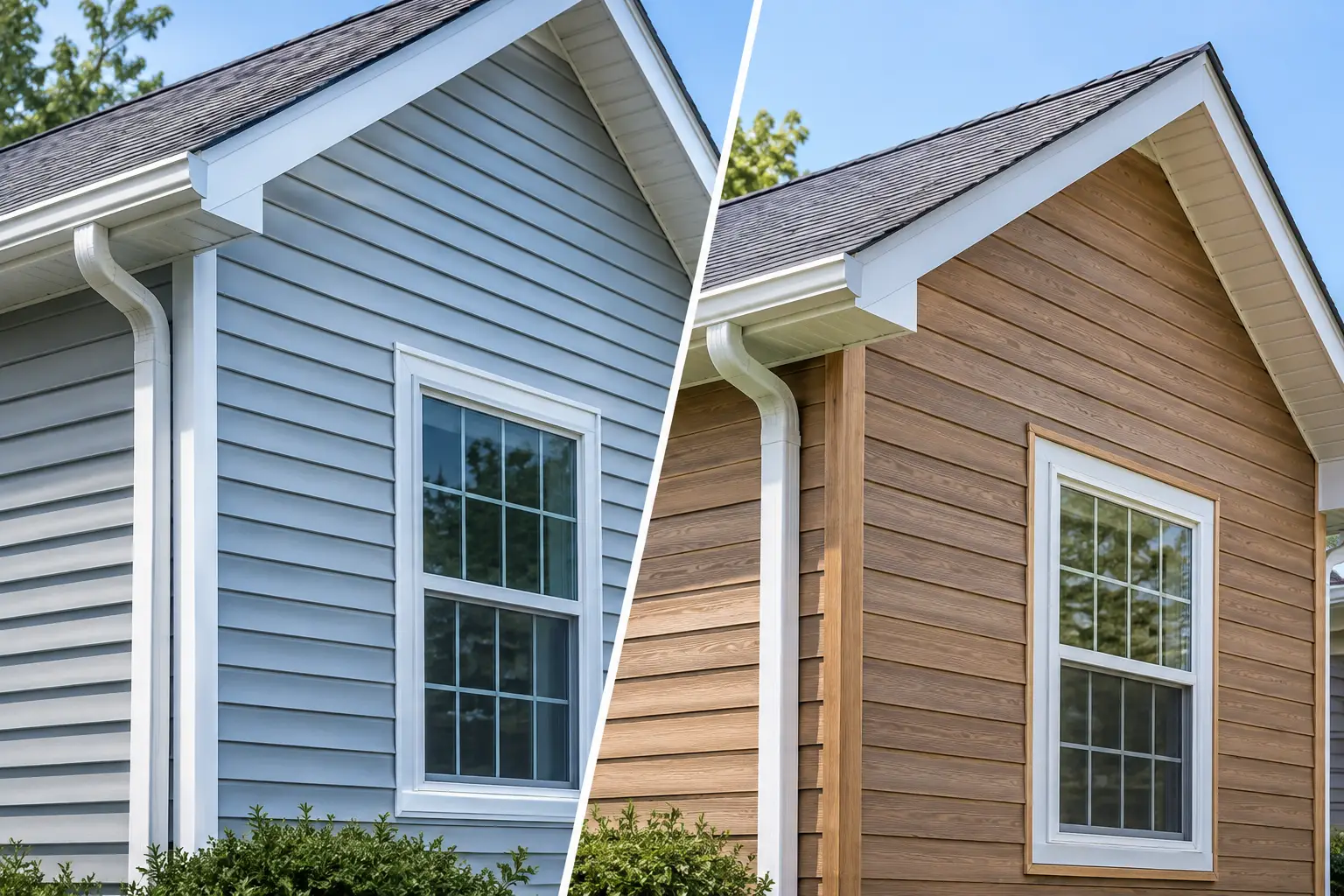
A siding decision can affect far more than curb appeal. It affects how well your home stands up to rain, wind, freezing temperatures, summer heat, and the everyday wear that comes with New Jersey weather. When homeowners compare vinyl versus engineered wood siding, the right answer usually comes down to budget, appearance, maintenance tolerance, and the condition of the home’s existing exterior.
Both materials can protect a home when they are installed correctly. But they do not look, age, or respond to moisture in the same way. Choosing based only on the lowest upfront price can lead to disappointment later, especially if the siding is covering hidden rot, poor flashing, or water damage around windows and doors.
Vinyl Versus Engineered Wood Siding at a Glance
Vinyl siding is a manufactured plastic exterior cladding. It is widely used because it is affordable, low-maintenance, and available in many colors and profiles. It does not need painting, and routine cleaning is usually enough to keep it looking presentable.
Engineered wood siding is made from wood fibers and resins that are treated and formed into durable siding boards or panels. It is designed to deliver the look of painted wood without the higher upkeep and cost often associated with traditional wood siding. It can offer stronger visual depth, cleaner lines, and a more substantial feel on the home.
Neither option is automatically better for every house. A homeowner replacing faded siding on a starter home may prioritize vinyl’s value and simple care. A homeowner updating an older home with detailed trim may prefer the richer appearance and design flexibility of engineered wood.
Cost: Upfront Price Is Only Part of the Job
Vinyl siding usually costs less to install than engineered wood siding. That makes it a practical choice when a homeowner needs exterior protection without stretching the budget. It can also make sense when the roof, gutters, windows, or other exterior systems need attention at the same time.
Engineered wood often has a higher initial price because the materials, installation details, trim work, and finishing process can be more involved. It also typically needs to be painted or factory-finished. Still, many homeowners feel the stronger curb appeal is worth the investment, particularly when they plan to stay in the home for years.
The siding material itself is not the full cost. Old siding removal, wall repairs, house wrap, flashing, insulation, trim replacement, and access around porches or additions all affect the final estimate. If moisture has gotten behind the current siding, the wall needs to be repaired before new material goes up. Covering damage may save money for a moment, but it puts the structure at greater risk.
A clear estimate should explain what is being removed, what repairs may be needed, how the home will be protected from water, and what trim details are included. Fast work matters, but exterior work must also be done right the first time.
Appearance and Curb Appeal
This is where engineered wood siding often has an edge. It can closely resemble real wood lap siding, board-and-batten styles, shakes, and more detailed exterior designs. The boards have a firmer, more solid appearance than vinyl, and painted finishes give homeowners more freedom with color choices.
Vinyl has improved significantly over the years. Modern vinyl comes in a wide range of colors, widths, textures, and profiles. For many homes, especially simple ranches, colonials, and split-levels, quality vinyl can deliver a clean, attractive result without the cost of a painted siding system.
The difference is most noticeable up close and in homes with architectural details. Engineered wood tends to create sharper corners and more substantial trim lines. Vinyl can look excellent when installed carefully, but it must be allowed to expand and contract with temperature changes. If it is nailed too tightly, it can buckle, ripple, or show uneven lines.
Weather Performance in New Jersey
Homes in Elizabeth, Linden, Rahway, Union, and nearby communities deal with all four seasons. That means siding has to handle cold snaps, heavy rain, humid summers, wind-driven storms, and constant temperature changes.
Vinyl siding resists moisture and will not rot like untreated wood. It is a strong choice for homeowners who want a material that does not need regular painting. However, vinyl can crack when hit hard in very cold weather, and high heat can cause warping or distortion in certain conditions. Dark colors may also absorb more heat and show fading over time.
Engineered wood is built to resist fungal decay and insect damage when installed and maintained according to manufacturer requirements. It handles impact well and is less likely than vinyl to crack from a stray baseball, ladder bump, or storm debris. But it is not maintenance-free. The paint or finish is part of its protection system. When that finish fails, moisture can eventually reach the siding.
Proper installation matters just as much as material selection. Water-resistant barriers, correctly installed flashing, sealed penetrations, and proper clearance from roofing, soil, decks, and masonry help prevent expensive problems. Siding is part of the home’s weather-defense system, not just a cosmetic covering.
Maintenance Requirements
Vinyl wins for low routine maintenance. A gentle wash with a hose and mild cleaner can remove dirt, pollen, and mildew. Homeowners should inspect it for loose panels, cracks, gaps around trim, and damage after storms. Avoid blasting vinyl with high-pressure water, which can force moisture behind the panels.
Engineered wood needs more attention over the long term. The exterior should be inspected regularly for damaged caulk, peeling paint, chipped edges, and areas where water may collect. Repainting schedules vary based on sun exposure, color, product finish, and weather conditions, but homeowners should expect to maintain the coating over time.
That added maintenance is not necessarily a deal-breaker. Many homeowners are comfortable repainting because it allows them to refresh the home’s color instead of replacing the siding. The key is staying ahead of small issues. A failed caulk joint near a window can let water enter the wall long before there is obvious interior damage.
Durability and Repairs
Vinyl siding can last for decades, but individual panels may become brittle or damaged. Matching replacement panels can be difficult if the original color has faded or the product line is no longer available. Repairs are often straightforward for an experienced installer, though color variation may still be visible.
Engineered wood can be easier to patch and repaint when damage is isolated. It is also more rigid, which many homeowners prefer. On the other hand, neglected engineered wood can develop serious moisture damage around bottom edges, roof intersections, windows, and poorly maintained trim. It performs best when water is directed away from the home through sound roofing, working gutters, and proper drainage.
If your siding damage is close to the roofline, chimney, or gutter system, inspect those areas together. A roof leak or overflowing gutter can damage new siding just as quickly as old siding. One coordinated exterior plan can prevent repeat repairs and protect the investment.
Which Siding Is Right for Your Home?
Choose vinyl siding if your priority is a lower upfront cost, simple maintenance, and dependable protection with a wide range of color options. It is especially practical when your existing exterior needs an efficient update and you want to keep more room in the budget for roofing, gutter, or repair work.
Choose engineered wood siding if you want a more authentic wood appearance, stronger design flexibility, and a painted finish that can elevate the look of the home. It is a good fit for homeowners who are prepared to maintain paint and caulk over time and want a more customized exterior.
Before making the final call, have the existing walls checked for water damage, soft sheathing, failing trim, and problem areas around windows and doors. Alpha Home Roofing LLC can help homeowners assess the full exterior, explain practical options, and provide a clear estimate within 24 hours. The best siding choice is the one that protects your home now and remains manageable for your budget years from now.