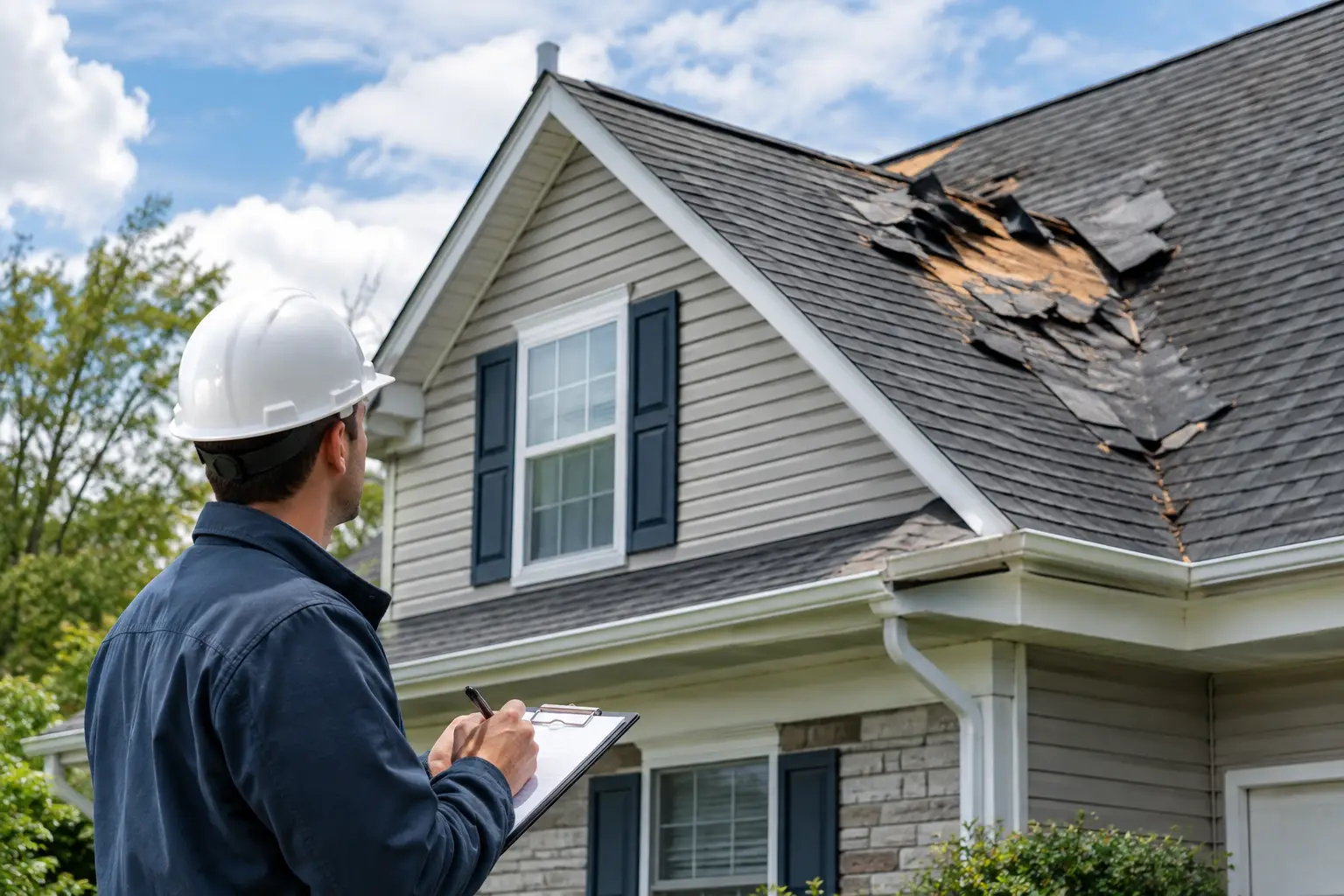
A hard windstorm can lift shingles, bend flashing, pull gutters loose, and drive rain where it does not belong. Wind damage insurance coverage can help with qualifying repairs, but only if the damage is documented, the policy applies, and the home is protected before a small opening turns into a major interior problem.
For homeowners, the first priority is not arguing about the claim. It is stopping further damage safely. A missing shingle or loose piece of siding may look minor from the ground, but it can expose the roof deck and allow water into insulation, ceilings, and walls during the next rain.
What Wind Damage Insurance Coverage May Include
Most standard homeowners insurance policies cover sudden wind damage to a roof and other exterior parts of the home. Coverage often applies when wind directly causes damage, such as shingles blown off, ridge caps lifted, flashing pulled loose, gutters torn from the fascia, or siding cracked by windblown debris.
If wind creates an opening and rain enters through that opening, the resulting interior water damage may also be covered. For example, if a storm removes shingles and water stains appear on a bedroom ceiling afterward, the roof repair and related interior repairs may be part of the same claim. The details depend on your policy language, deductible, limits, and the insurer’s inspection.
Wind damage insurance coverage is not the same as a maintenance plan. Insurance commonly excludes wear and tear, old age, poor installation, gradual leaks, and damage caused by a roof that was already at the end of its useful life. A roof can be older and still suffer legitimate storm damage, but the adjuster will look for evidence that wind caused a sudden, identifiable change.
That is why timing matters. If you notice a problem after high winds, take it seriously and document it right away.
Start With Safety and Temporary Protection
Do not climb onto a storm-damaged roof. Loose shingles, wet surfaces, damaged decking, and fallen branches make a roof unsafe for homeowners. Walk around the property from ground level instead. Look for visible shingle pieces, metal flashing, gutter sections, siding panels, tree limbs, and debris.
Take clear photos and short videos of what you can see. Include wide shots of the house, close-ups of damage, and photos of any water spots or active leaks inside. If it is safe, note the date and time of the storm, when you first noticed the problem, and any steps you took to prevent additional damage.
Your insurance policy generally expects you to make reasonable efforts to prevent further loss. That can mean placing a bucket under a drip, moving belongings away from a leak, or arranging a professional emergency tarp. It does not mean you should make risky repairs yourself or permanently cover damage before it can be inspected.
Keep receipts for emergency protection and related expenses. In many cases, reasonable temporary repairs may be reimbursable, but homeowners should confirm the process with their insurer and save every record.
Signs Wind Has Damaged Your Roof or Exterior
Some storm damage is easy to spot. Other problems are hidden until the next rainfall. Shingles can be lifted without fully blowing away, breaking the seal that protects the roof from wind-driven rain. Nail lines can become exposed, tabs can crease, and flashing around chimneys, vents, and roof edges can shift out of position.
Pay attention to these warning signs after strong wind:
- Missing, lifted, cracked, or creased shingles
- Shingle granules collecting in gutters or at downspouts
- Loose ridge caps, flashing, soffit, or fascia
- Gutters sagging, separating, or overflowing in places they did not before
- New water stains, damp attic insulation, or dripping ceilings
- Cracked, loose, or missing siding panels
A professional exterior inspection can separate new storm damage from older conditions. That distinction matters during a claim. It also helps homeowners avoid waiting for a leak to prove there is a problem.
How to File a Stronger Wind Damage Claim
Call your insurance company as soon as you have a basic record of the damage and have taken emergency steps to protect the home. Ask about your deductible, claim number, inspection process, and whether temporary repairs need prior approval. Be clear and factual about what happened. Avoid guessing at the cause or the cost before the damage has been evaluated.
Then arrange for a qualified residential roofing contractor to inspect the affected areas. A contractor can identify damage to roofing, gutters, siding, flashing, and related exterior components that may not be visible from the ground. A written estimate gives you a practical scope of work for comparison with the insurance adjuster’s findings.
The contractor works for you. The insurance adjuster represents the insurer’s role in evaluating the claim. Their scopes may match, or they may not. If the insurance estimate misses clearly documented storm-related work, ask questions and provide supporting photos, inspection notes, and contractor documentation. Stay organized and keep communication in writing whenever possible.
Do not sign a repair agreement you do not understand, and do not assume every repair will be paid by insurance. Your out-of-pocket cost can depend on your deductible, depreciation, policy type, and any work that is excluded as pre-existing wear. Clear documentation is your best protection against confusion.
Repair or Replacement: What Determines the Answer?
A few missing shingles may be repairable if matching materials are available and the surrounding roof is in good condition. A localized repair can be the practical choice when wind damage is limited and the roof still has useful life left.
Replacement may make more sense when wind affects multiple slopes, shingles are brittle or extensively creased, leaks have reached the roof deck, or the existing roof is already near the end of its life. Local building requirements can also affect the scope of work, especially if repairs uncover older layers or damaged decking.
The right answer is not always the biggest project. It is the repair or replacement that properly restores the home’s weather protection. A dependable contractor should explain what is damaged, what needs immediate attention, and what can reasonably wait.
Do Not Forget Gutters, Siding, and Flashing
A roof is only one part of the home’s protective exterior. Wind can pull gutters away from the roofline, damage downspouts, loosen siding, and bend flashing around roof penetrations. Those problems can direct water behind siding, against the foundation, or under roofing materials.
When a wind claim is being inspected, look at the full exterior system. A repaired roof with loose gutters or damaged flashing can still leave the home exposed. Handling related exterior repairs together also helps ensure everything fits, drains, and protects the house as it should.
For homeowners in Elizabeth, Linden, Union, and nearby North Jersey communities, fast action is especially valuable because one storm is often followed by heavy rain. Alpha Home Roofing LLC can inspect visible roof and exterior storm damage, provide a clear estimate, and help secure the home with practical repair recommendations.
A Smart Response Starts Before the Next Rain
After a windstorm, do not wait for a stain to spread across the ceiling. Photograph what you see, report qualifying damage promptly, protect the home from further exposure, and get a professional residential exterior inspection. The goal is simple: keep a manageable storm repair from becoming a costly water-damage problem.