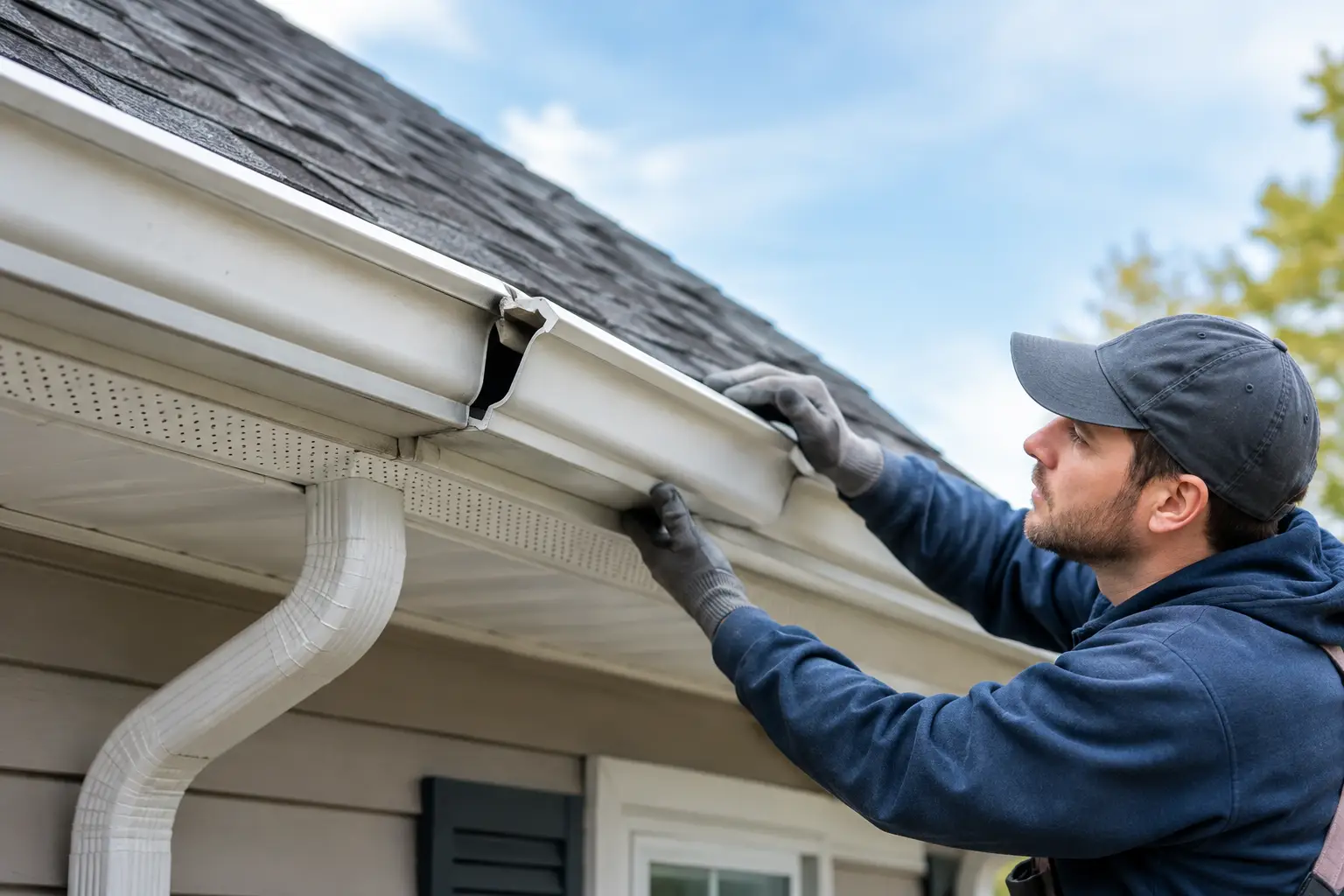
A gutter that is pulling away from the house is more than an eyesore. It can send rainwater behind the gutter, onto your fascia boards, down your siding, and around your foundation. If you are asking, “why are gutters pulling away,” the issue usually comes down to loose fasteners, rotted wood, heavy debris, poor installation, or a roof drainage problem that has been building for years.
Do not wait for the next hard rain to see how bad it gets. A sagging or separated gutter can turn a manageable repair into damaged trim, roof-edge repairs, interior leaks, and costly foundation moisture problems.
Why Are Gutters Pulling Away From the House?
Gutters are secured along the roof edge with hangers, screws, spikes, or brackets. Those parts have to carry the weight of the gutter itself, plus water, wet leaves, ice, and snow. When the attachment system fails or the wood behind it weakens, the gutter starts to sag, lean outward, or separate from the fascia.
In North Jersey, repeated freeze-thaw cycles can make the problem worse. Water trapped in a clogged gutter freezes, expands, and adds major weight. A gutter that was only slightly loose in the fall can pull several inches away after a winter storm.
The visible gap is the warning sign. The real cause may be hidden behind the gutter, at the roof edge, or inside the downspout system. That is why a proper inspection matters before anyone simply pushes the gutter back into place.
Loose or Failing Gutter Fasteners
Older gutters may be held with long spikes driven through the gutter into the fascia. Over time, those spikes work loose. Modern hidden hangers and screws can also fail if they are spaced too far apart, installed into weak wood, or pulled under excess weight.
You may notice a few fasteners sticking out, missing screws, or sections that move when you touch them. Refastening the gutter may solve the problem if the fascia is solid. If the wood is soft or rotted, new screws will not hold for long. The damaged board needs to be repaired first.
Rotted Fascia Boards
The fascia is the board behind your gutters along the roofline. It provides the solid surface that keeps the gutter system attached. When water gets behind the gutter or overflows repeatedly, it can soak into this wood and cause rot.
Rotted fascia often shows up as peeling paint, dark staining, soft spots, or a gutter section that has pulled away in one specific area. The wood can look acceptable from the ground while being badly deteriorated behind the gutter.
This repair requires more than adding a screw or hanger. The gutter must be removed carefully, the damaged fascia replaced, and the roof edge checked for water intrusion before the system is reinstalled.
Clogged Gutters and Heavy Debris
Leaves, twigs, roofing granules, and shingle debris can block the gutter channel and downspouts. When water cannot drain, it sits in the gutter. One gallon of water weighs more than eight pounds, so a long section full of standing water can put hundreds of pounds of extra stress on the hangers.
Clogs are especially hard on gutters during a storm. Water spills over the front and back edges, saturates the fascia, and may wash against the siding or foundation. In winter, that standing water can freeze into heavy ice.
Cleaning is not just about appearance. It is basic exterior maintenance that helps protect the roofline and keeps the gutter system from being overloaded.
Ice Dams and Winter Weight
Ice dams form when snow melts on a warmer upper roof area and refreezes near the colder roof edge. The resulting ice can trap water and create a heavy ridge along the eaves. Gutters can bend, pull loose, or detach under that pressure.
Ice dams may also point to a larger issue with attic insulation, ventilation, or air leaks. Reattaching the gutter without addressing the conditions causing repeated ice buildup can leave your home exposed to the same damage next winter.
Poor Installation or the Wrong Gutter Pitch
A gutter system must be pitched slightly toward the downspouts so water moves out instead of pooling. It also needs enough properly spaced hangers to support the run. If the slope is wrong, the gutter holds water. If hangers are too far apart, it starts to sag.
Installation details matter at corners, long gutter runs, and areas where roof valleys send a concentrated amount of water into one spot. A valley can overwhelm an undersized gutter during heavy rain, even if the rest of the system seems fine.
Sometimes the best answer is a targeted repair. Other times, an aging or poorly installed system needs replacement with correctly sized gutters, secure hangers, and properly placed downspouts.
Roof Problems Can Push Water Behind the Gutters
Not every gutter separation starts with the gutter itself. Damaged shingles, failing drip edge, worn roof flashing, or deterioration at the roof edge can direct water behind the gutter instead of into it.
Look for staining under the eaves, peeling paint, damp soffits, or water running down the exterior wall after rain. These signs can mean water is bypassing the gutter. Left alone, that moisture damages the fascia and weakens the attachment point.
A contractor should inspect the roof edge and gutter system together. Your roof, fascia, soffits, siding, and gutters all work as one exterior protection system. Repairing only the visible symptom can leave the source of the water untouched.
Signs You Need Gutter Repair Now
A small gap can become a major failure quickly, especially before a period of heavy rain or snow. Call for an inspection promptly if you see gutters sagging between hangers, spikes or screws coming loose, water spilling behind the gutter, or visible separation from the fascia.
Other warning signs include rust, cracks, bent sections, dripping seams, peeling paint near the roofline, and soil erosion below the downspouts. Water stains on ceilings near exterior walls should be treated seriously, since roof-edge moisture may already be getting inside.
Do not climb a ladder during wet, icy, or windy conditions to force a gutter back into position. Gutters can shift suddenly, and weakened fascia may not support your weight or the ladder safely. A visual check from the ground is enough to know when it is time to bring in help.
Can You Repair a Gutter That Is Pulling Away?
It depends on what is failing. If the gutter is in good condition and the fascia is sound, a professional can often reset the pitch, replace loose hangers, add stronger fasteners, reseal joints, and clear the drainage path. This can be a practical, cost-effective repair.
Replacement becomes the smarter choice when the gutters are badly bent, corroded, repeatedly leaking, undersized, or attached to extensive rotted fascia. Replacing a failing system gives the installer the chance to correct slope, hanger spacing, downspout placement, and roof-edge drainage at the same time.
For homeowners, the main goal is not simply making the gutter look straight again. The goal is directing water safely away from the roofline, siding, and foundation every time it rains.
How to Prevent Gutters From Pulling Away Again
Keep gutters and downspouts clean, particularly after heavy leaf drop and before winter. Watch how water moves during a normal rain. It should enter the gutter, travel toward the downspout, and discharge away from the foundation without overflowing.
Trim back branches that drop debris onto the roof, and address roof repairs before they send water behind the gutter. If your home has recurring clogs, gutter guards may help, but they are not a substitute for correct pitch, solid hangers, and occasional maintenance. Some guard styles can still collect fine debris on top or need cleaning around the edges.
A yearly roofline inspection is a smart way to catch loose hangers, failing caulk, soft fascia, and drainage issues before they become an urgent repair. This is especially valuable for older homes and homes surrounded by mature trees.
Get the Roofline Checked Before Damage Spreads
A gutter pulling away from your house is your home telling you that water management needs attention. Alpha Home Roofing LLC can inspect the gutters, fascia, roof edge, and drainage path to identify what failed and recommend a straightforward repair or replacement. For homeowners in Elizabeth and nearby North Jersey communities, acting before the next storm is the best way to protect the parts of your home that water damages first.